Choosing the right battery can make or break your day on the water. The best marine batteries for trolling motors deliver dependable power, longer run time, and the reserve capacity you need when conditions get rough.
In this roundup, we focused on practical options for different boats, budgets, and trolling motor setups so you can match the battery to your actual fishing or boating needs.
Best 10 Marine Batteries for Trolling Motors Picks for 2026
Smart Bluetooth LiFePO4 Pick
Litime 12V 100Ah Trolling Motor Battery

- Bluetooth app monitoring for battery status and system checks
- 22.2 lb Group 31 lithium build for easier handling
- Low-temp protection and long cycle life for marine use
Best For: Boat owners who want app-based monitoring and lightweight trolling motor power
Dual-Purpose AGM Workhorse
Interstate Group 24M Marine/RV AGM Battery

- Dual-purpose AGM can start the motor and power trolling use
- Sealed lead-acid build for rugged marine and RV conditions
- Heavier 44.6 lb design with deep-cycle focus
Best For: Boaters who want a single battery for cranking and trolling motor power
Compact Group 24 Lithium Option
SUPER EMPOWER 12V 100Ah LiFePO4 Group 24

- Group 24 drop-in lithium replacement at 21.6 lb
- 100A BMS with temperature and circuit protection
- Expandable up to 4S4P for larger power systems
Best For: Space-conscious buyers who want a lightweight Group 24 lithium battery
ABYC-Ready Trolling Motor Battery
Litime 12V 100Ah Group 31 LiFePO4 Battery
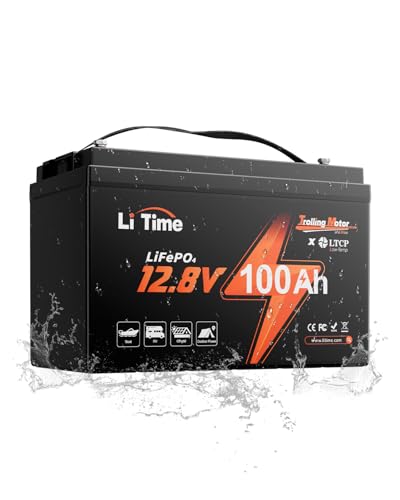
- ABYC E-13 standard with dust, water, and salt spray protection
- TVS helps protect 12V-36V trolling motors from spikes
- 22.16 lb lithium build with 4000+ cycle rating
Best For: Anglers who want marine-grade protection and lightweight trolling motor power
Budget Deep-Cycle Pick
Mighty Max 12V 55Ah Deep Cycle Battery

- 12V 55Ah sealed lead-acid battery
- Spill-proof AGM with shock and vibration resistance
- Maintenance-free and mountable in any position
Best For: Pontoon and small boat trolling motor setups
Bluetooth 24V Choice
LiTime 24V 50Ah Bluetooth Trolling Battery

- 24V lithium battery for 70–100 thrust trolling motors
- Bluetooth 5.0 monitoring for SOC and voltage
- 50A BMS with cold-weather and surge protection
Best For: 24V trolling motor users who want compact lithium power
Group 31 Power Upgrade
12V 100Ah LiFePO4 for RV and Marine Use

- 100Ah capacity in Group 31 size
- 24 lb lightweight lithium build
- 100A smart BMS with low-temp cutoff
Best For: Boat and RV users wanting a drop-in high-capacity lithium upgrade
Portable Small-Boat Choice
12V 20Ah Bluetooth LiFePO4 for Small Marine Setups
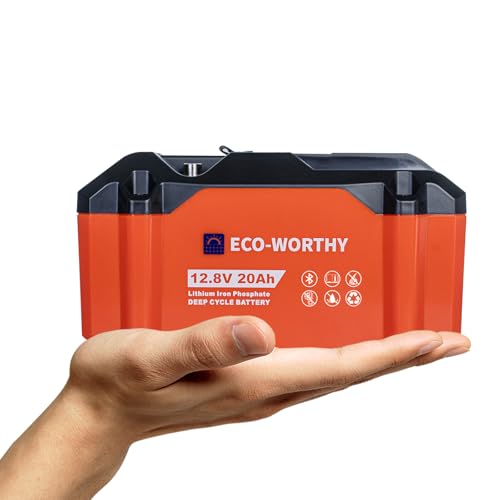
- Only 5.4 lbs and easy to carry
- Bluetooth 5.1 battery monitoring
- Cold-weather charging and discharge protection
Best For: Small boats, kayaks, and fishfinder power
Smart Bluetooth LiFePO4 Pick – Litime 12V 100Ah Trolling Motor Battery
If you want a modern option among marine batteries for trolling motors, this LiTime 12V 100Ah model focuses on weight savings, app monitoring, and cold-weather safeguards. It is built for 30-70 lb trolling motors and keeps the package simple with a standard Group 31 size and lithium performance.
Best For: Boat owners who want Bluetooth battery monitoring, low weight, and long cycle life for trolling motor use.
Pros:
- Bluetooth monitoring lets you check status, discharge, and system checks from your phone.
- Low-temp protection stops charging below 32°F and discharging below -4°F.
- Lightweight 22.2 lb build in a Group 31 footprint helps reduce boat weight.
- High capacity and long cycle life are rated at 1280Wh and up to 15,000 cycles at lower DOD.
Cons:
- Designed for energy storage, not for starting batteries or cranking use.
- Bluetooth activation may require a lithium-activation or MPPT charger on first use.
Overall, this is a strong pick if you value smart monitoring and lightweight lithium power over basic AGM simplicity. Its protection features and expandable design make it a flexible choice for serious trolling motor setups.
Dual-Purpose AGM Workhorse – Interstate Group 24M Marine/RV AGM Battery
For buyers comparing marine batteries for trolling motors, this Interstate AGM is a practical dual-purpose option that can start the motor and also power the trolling motor. It uses a Group 24M sealed lead-acid design, making it a straightforward choice for boaters who want dependable AGM power without moving to lithium.
Best For: Boat and RV owners who want one battery for starting and trolling motor support.
Pros:
- Dual-purpose design works as a cranking battery and for trolling motor power.
- AGM construction is built for rugged conditions and sealed use.
- Claims 2x-3x longer service life than conventional alloy AGM and flooded batteries.
- Thick plates support deep-cycle performance for accessories and repeated discharge.
Cons:
- At 44.6 lb, it is much heavier than lithium alternatives.
- Lower capacity and lead-acid chemistry may not suit users wanting maximum runtime per pound.
This is a good fit if you want familiar AGM reliability and a battery that can handle both starting and trolling duties. It is less cutting-edge than lithium, but it remains a solid no-fuss option for many boats and RVs.
Compact Group 24 Lithium Option – SUPER EMPOWER 12V 100Ah LiFePO4 Group 24
If you need marine batteries for trolling motors that fit a tighter space, this SUPER EMPOWER 12V 100Ah LiFePO4 battery is designed as a drop-in Group 24 replacement. It is built for deep-cycle energy storage in marine, RV, solar, and off-grid setups, with a built-in BMS for everyday protection.
Best For: Buyers who want a Group 24 lithium drop-in replacement for trolling motor and marine house power.
Pros:
- Group 24 size and 21.6 lb weight make it easier to install than lead-acid batteries.
- Built-in 100A BMS protects against overcharge, over-discharge, overcurrent, short circuit, and temperature issues.
- Supports 4S4P expansion for larger energy banks when needs grow.
- Low-temperature protection pauses charging below 32°F and stops discharge below -4°F.
Cons:
- Not suitable for engine starting or cranking applications.
- Works best with lithium-compatible charging equipment rather than standard non-lithium chargers.
As a compact lithium battery, this model makes sense when you want lighter weight and easier installation in a Group 24 footprint. It is especially appealing for anglers and boaters building a dedicated deep-cycle power setup.
ABYC-Ready Trolling Motor Battery – Litime 12V 100Ah Group 31 LiFePO4 Battery
This LiTime 12V 100Ah option is aimed squarely at boaters shopping for marine batteries for trolling motors that emphasize protection and compatibility. It adds ABYC E-13 standard coverage, a TVS to help shield 12V-36V motors from voltage spikes, and a lightweight Group 31 form factor for easier handling on the water.
Best For: Anglers who want a lightweight, protection-focused lithium battery for 12V-36V trolling motors.
Pros:
- Meets ABYC E-13 standard and includes extra protection against dust, water, and salt spray.
- TVS protection helps guard 12V-36V trolling motors from voltage spikes.
- At 22.16 lb, it is far lighter than comparable lead-acid batteries.
- Expandable to 4P4S and rated for 4000+ cycles at 100% DOD.
Cons:
- Not intended for starting batteries, golf carts, or jack use.
- Bluetooth monitoring is not included on this model.
For buyers who prioritize marine-specific protection and a light carry weight, this battery checks a lot of boxes. It is a practical trolling motor choice when durability and electrical stability matter more than extras like Bluetooth.
Budget Deep-Cycle Pick – Mighty Max 12V 55Ah Deep Cycle Battery
Mighty Max Battery 12V 55Ah Power Boat Pontoon Electric Trolling Motor Deep Cycle Battery
Check Price On AmazonIf you want a straightforward marine battery for trolling motors, this 12V 55Ah sealed lead acid option is built for basic deep-cycle use with spill-proof AGM construction. It’s a practical fit when you need a maintenance-free battery that can handle discharge/recovery duty without adding much complexity to your setup.
Best For: Pontoon and small boat owners who want an affordable 12V deep-cycle battery for trolling motor use.
Pros:
- 12V 55Ah SLA/AGM design with maintenance-free operation
- Spill-proof build with shock and vibration resistance
- Can be mounted in any position
- UL certified and backed by a one-year warranty
Cons:
- Battery and screws only; no wire harness or mounting accessories included
- Lead-acid construction is heavier than lithium alternatives
Overall, this is a no-frills choice for boaters who value simple compatibility and proven sealed lead-acid construction over advanced features. It makes the most sense if you want an economical replacement battery and don’t need Bluetooth, app monitoring, or ultra-light weight.
Lightweight Lithium Upgrade – Lithova 12V 100Ah Group 24 LiFePO4
For marine batteries for trolling motors, this 12V 100Ah LiFePO4 model is designed as a lead-acid replacement with a much lighter Group 24 form factor. It’s aimed at boaters who want longer cycle life, faster charging, and built-in protection without adding complicated setup requirements.
Best For: Boaters upgrading from lead-acid to a lighter 12V lithium battery with long cycle life.
Pros:
- Only 22.57 lb and Group 24 size for easier drop-in compatibility
- 4000+ cycles at 100% DoD and up to 15,000 cycles at 60% DoD
- Built-in smart BMS with over-charge, over-discharge, over-current, short-circuit, and cold-weather protection
- Compatible with several popular chargers, including Minn Kota Precision and Dual Pro
Cons:
- Notes state it is for energy storage rather than start-up engine use
- May require matching lithium charger settings and proper charging voltage
This is a strong pick if you want a modern lithium trolling motor battery that prioritizes weight savings and longevity. The advertised charger compatibility and zero-maintenance design make it especially appealing for easier upgrades from AGM or SLA batteries.
Bluetooth 24V Choice – LiTime 24V 50Ah Bluetooth Trolling Battery
If you need a marine battery for trolling motors running on 24V systems, this LiTime lithium unit is built for 70–100 thrust motors and adds Bluetooth monitoring for easier tracking on the water. It combines a compact Group 24 footprint with low-temperature protection and a 50A BMS for a more controlled power setup.
Best For: 24V trolling motor users who want compact lithium power with Bluetooth monitoring.
Pros:
- Built for 24V trolling motors in the 70–100 thrust range
- Bluetooth 5.0 lets you check SOC and voltage in real time
- 50A BMS with over 20 protections plus TVS surge protection
- Low-temperature cutoff helps protect the battery in cold conditions
Cons:
- Requires a 24V system, so it won’t fit 12V-only setups
- Its 50Ah capacity may be better suited to compact builds than maximum runtime needs
For boaters who want a smarter 24V lithium setup, this model stands out for monitoring, protection, and space-saving design. It’s a good fit when you want reliable performance and the ability to keep an eye on battery status without guessing.
Group 31 Power Upgrade – 12V 100Ah LiFePO4 for RV and Marine Use
If you’re comparing marine batteries for trolling motors, this 12V 100Ah LiFePO4 option is built for buyers who want longer runtime, lighter weight, and less maintenance than lead-acid. Its Group 31 size makes it a practical drop-in choice for many existing battery boxes, while the smart BMS and low-temperature charge protection add a useful layer of safety for year-round boating.
Best For: Anglers, RV owners, and boaters who want a lightweight Group 31 battery with high cycle life and strong safety protections.
Pros:
- 100Ah capacity in a compact Group 31 form factor
- Weighs only 24 lbs, making it much easier to install and carry
- 100A smart BMS with overcharge, over-discharge, over-current, and short-circuit protection
- Low-temperature cut-off helps protect the battery when charging below 32°F
Cons:
- Higher upfront cost than basic lead-acid batteries
- Best fit is strongest for Group 31 compartments, so size planning still matters
This is a strong pick if you want a long-life lithium upgrade that can handle marine and trolling motor use without the weight penalty of traditional batteries. The combination of high cycle claims, fast charging, and safety-focused controls makes it a well-rounded option for serious repeat use.
Portable Small-Boat Choice – 12V 20Ah Bluetooth LiFePO4 for Small Marine Setups
For smaller boats and accessories, this portable option stands out among marine batteries for trolling motors when you need something compact rather than maximum capacity. The 20Ah LiFePO4 design is easy to carry, includes Bluetooth monitoring, and adds cold-weather protection, which makes it a practical fit for kayaks, fishfinders, and light-duty marine use.
Best For: Kayaks, small boats, fishfinders, and anglers who want a compact lithium battery with app monitoring.
Pros:
- Very compact 12V 20Ah battery at 5.4 lbs
- Bluetooth 5.1 lets you check voltage, current, and capacity on your phone
- Built-in 20A BMS protects against overcharge, deep discharge, overload, overheating, and short circuits
- Cold-weather protection stops charging below 20°F and discharge below -4°F
Cons:
- 20Ah capacity is better for smaller loads than long trolling sessions
- DC output is limited to 5A, so it is not ideal for higher-demand accessories
If portability and visibility matter more than raw capacity, this battery offers a smart feature set for compact marine setups. It is especially appealing for users who want a light battery they can monitor easily while keeping power needs modest.
All-Around Group 24 Pick – 12V 100Ah LiFePO4 for Trolling Motors and Marine Use
Among marine batteries for trolling motors, this 12V 100Ah LiFePO4 model is aimed at buyers who want a mix of capacity, safety, and standard fitment. The Group 24 size makes it easier to slot into common battery boxes, while the built-in smart BMS, low self-discharge, and long cycle-life claims make it a practical long-term upgrade from lead-acid or AGM.
Best For: Boaters and RV users who want a Group 24 lithium battery with long service life and broad compatibility.
Pros:
- 100Ah capacity in a Group 24 form factor
- Smart BMS adds protection against overcharge, over-discharge, over-current, and short circuits
- Low self-discharge rate of less than 3% per month
- Lightweight at 22.6 lbs with 10-year lifespan claims
Cons:
- Heavier than some other lithium options in this size class
- Does not include Bluetooth monitoring or other app-based features
This is a straightforward all-around marine lithium battery with a familiar size and enough capacity for many trolling motor setups. It is a solid choice if you want dependable power, simple installation, and long cycle-life benefits without extra bells and whistles.
How We Picked These Marine Batteries for Trolling Motors
We looked for batteries that balance usable capacity, discharge performance, cycle life, and marine-friendly construction. We also favored models that are commonly used for trolling motors, with attention to AGM and LiFePO4 options, weight, and compatibility with 12V and 24V systems.
For Marine Batteries for Trolling Motors, the most important question is not just total amp-hours. It is how much power you can use without damaging the battery, how consistently it delivers that power, and how well it fits your boat’s space and charging setup.
Quick Comparison
AGM batteries are often the simpler drop-in choice for boaters who want familiar charging behavior and cold-weather reliability. LiFePO4 batteries usually cost more upfront, but they offer lighter weight, faster charging, more usable capacity, and far more cycle life. If you need portability or a compact backup option, a smaller lithium pack can make sense. For larger boats or heavier use, a higher-capacity 100Ah lithium battery is usually the better long-term value.
Key Buying Factors for Marine Batteries for Trolling Motors
Voltage and System Match
Start with your trolling motor voltage: 12V for many small to mid-size setups, 24V for more thrust and longer runtime, and higher-voltage systems only when your motor requires them. A battery that does not match your motor and charger setup is an expensive mistake.
Capacity and Usable Power
Compare amp-hours, but remember that lithium batteries typically let you use more of their rated capacity than lead-acid batteries. That means a 100Ah LiFePO4 battery often delivers more real-world runtime than a 100Ah AGM.
Weight and Handling
Battery weight matters more on small boats and portable setups. Lithium options can dramatically reduce carry weight, improve balance, and make installation easier.
Cycle Life and Total Value
If you fish often, cycle life becomes a major cost factor. A battery with thousands of cycles may save money over time even if it costs more initially.
Charging and Protection Features
Look for a built-in BMS, proper low-temperature charging protection if you fish in cold conditions, and charger compatibility. Good protection helps extend battery life and prevents avoidable failures.
Who Should Buy Which Marine Batteries for Trolling Motors?
Choose AGM if you want a familiar, straightforward battery for moderate use and do not mind the extra weight. Choose LiFePO4 if you want the best blend of runtime, lighter weight, and long-term value. A smaller lithium battery fits anglers who need portability or a secondary power source, while a larger 100Ah model is better for serious tournament-style use or longer days on the water.
If you are comparing multiple options, the best choice is usually the one that matches your motor voltage, your typical fishing time, and the amount of weight you can comfortably carry.