The best compact hydration packs make it easier to carry water, keys, a phone, and other essentials without the bulk of a traditional backpack. The right design should feel stable while moving, provide convenient access to water, and match the demands of your activity.
We selected 10 options spanning running vests, cycling packs, hiking backpacks, and larger tactical designs. Use the guide below to compare capacity, fit, storage, insulation, and useful features before choosing.
Best 10 Compact Hydration Packs Picks for 2026
Best Lightweight Value
12L Lightweight Hydration Backpack

- 8.5-ounce pack with a 2-liter bladder
- Adjustable straps and breathable air-mesh back
- Multiple pockets with waterproof, tear-resistant nylon
Best For: Runners, hikers, and cyclists needing low weight with useful storage
Best for Bike Rides
CamelBak Classic Bike Hydration Pack

- 85-ounce Crux reservoir for cycling hydration
- Ventilated back panel and harness
- Reflective accents plus a secure zippered pocket
Best For: Cyclists and mountain bikers wanting essential hydration and storage
Best Adjustable Fit
Unigear 2L Compact Hydration Pack

- Chest and waist straps help limit bounce
- Compact, aerodynamic profile for active use
- Replaceable 2-liter bladder and splash-resistant nylon
Best For: Runners, cyclists, and hikers needing a secure adjustable fit
Best Minimalist Pick
CamelBak Hydrobak 1.5L Bike Pack

- 13.4-ounce compact design for short rides
- 50-ounce Crux reservoir with easy refills
- Breathable carry system and zippered essentials pocket
Best For: Commuters and cyclists wanting lightweight hydration for quick rides
Best Lightweight Running Vest

- 2L BPA-free PEVA bladder with high-flow bite valve
- Adjustable, breathable fit designed to reduce bounce
- Reflective strips and emergency whistle add visibility and safety
Best For: Running, marathons, cycling, and hiking with a close-fitting vest
Best Rugged Capacity
MARCHWAY Tactical 3L Hydration Pack

- Larger 3L TPU reservoir with leak-control features
- Durable 1000D water-repellent nylon construction
- MOLLE webbing and two pockets expand carrying options
Best For: Rugged hiking, cycling, camping, climbing, and tactical-style outdoor use
Best Versatile Daypack
Blue Quartz 2L Hydration Backpack

- 2L bladder with insulated compartment
- 10L pack capacity and wide-opening main compartment
- Breathable carry system with multiple quick-access storage features
Best For: Cycling, hiking, biking, festivals, and outings requiring extra gear storage
Compact Trail Companion

- 2L bladder included
- Breathable, padded carry system
- Adjustable sternum and waist straps
Best For: Hiking, running, and cycling with essentials
All-Day Adventure Pick
Maelstrom 2L Running Hydration Vest

- 2L BPA-free bladder included
- Four storage pockets
- Reflective strips and helmet clips
Best For: Cycling, running, and organized outdoor hydration
Ultralight Running Choice
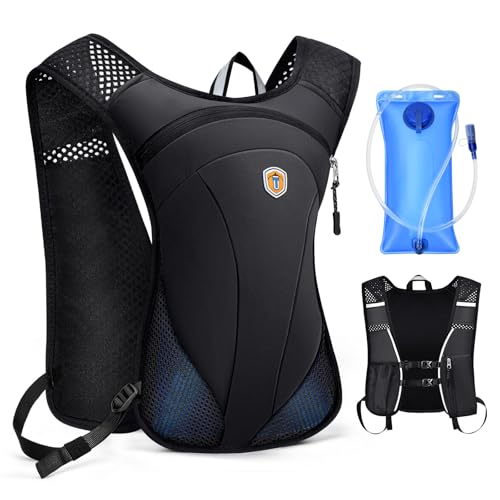
- 2L bladder included
- Ventilated neoprene and mesh back
- Front and rear storage pockets
Best For: Running and lightweight outdoor activities
Best Lightweight Value – 12L Lightweight Hydration Backpack
If you want compact hydration packs with room for a few essentials, this 12-liter nylon backpack combines an 8.5-ounce pack weight with a 2-liter bladder. Its adjustable fit and breathable back make it a practical option for running, hiking, and cycling.
Best For: Runners, hikers, and cyclists who want very low pack weight plus multiple small storage areas.
Pros:
- Very lightweight 8.5-ounce design with a 2-liter BPA-free PEVA bladder
- Adjustable shoulder and chest straps support a customizable fit
- Breathable air-mesh back helps improve airflow
- Waterproof, tear-resistant nylon and several storage compartments
Cons:
- Storage is aimed at small essentials rather than bulky gear
- The bladder capacity may be more than needed for short outings
This is a strong all-around choice when minimal weight, flexible fit, and practical organization matter more than a highly specialized cycling layout.
Best for Bike Rides – CamelBak Classic Bike Hydration Pack
Among compact hydration packs, the CamelBak Classic focuses on straightforward cycling hydration and a stable, ventilated fit. Its 85-ounce Crux reservoir, breathable harness, and small zippered pocket cover the essentials for longer rides.
Best For: Cyclists and mountain bikers who prioritize a familiar reservoir system, ventilation, and basic ride-day storage.
Pros:
- 85-ounce Crux reservoir is designed to deliver more water per sip
- Air-mesh back panel and ventilated harness promote airflow
- Reflective accents can improve visibility in low light
- Zippered pocket secures keys, tools, or small personal items
Cons:
- Its 0.5-liter cargo capacity limits room for extra gear
- At 0.41 kg, it is not the lightest option in this roundup
The Classic is a sensible bike-focused pick for riders who need dependable hydration and a little secure storage without carrying a full-size daypack.
Best Adjustable Fit – Unigear 2L Compact Hydration Pack
This Unigear model is one of the more compact hydration packs for racing, running, cycling, and hiking. Adjustable shoulder, chest, and waist straps help reduce bounce, while the 2-liter replaceable bladder provides a practical amount of water for active outings.
Best For: Users who want a compact, aerodynamic pack with a broad adjustable fit for teenagers through adults.
Pros:
- Adjustable straps accommodate chest sizes from 27 to 50 inches
- Compact design is intended to reduce wind drag during active use
- Includes a replaceable 2-liter BPA bladder with a screw cap
- Splash-resistant nylon and built-in waist straps improve durability
Cons:
- Small front pocket offers limited storage for keys and a snack
- At 1.1 pounds, it is heavier than the lightest option listed
Choose this pack when a secure, bounce-reducing fit and streamlined shape are more important than carrying extensive personal gear.
Best Minimalist Pick – CamelBak Hydrobak 1.5L Bike Pack
For short rides and commutes, the CamelBak Hydrobak keeps compact hydration packs simple. Its minimalist build includes a 50-ounce Crux reservoir, breathable carrying system, and zippered pocket for the small items you need close at hand.
Best For: Commuters, cyclists, and riders who want lightweight hydration for short rides without excess pack volume.
Pros:
- Compact design weighs 13.4 ounces and is suited to short outings
- 50-ounce Crux reservoir supports convenient on-the-go hydration
- Air-mesh back and ventilated harness promote cooling airflow
- Zippered pocket stores keys, tools, and other ride essentials
Cons:
- 1.5-liter reservoir provides less water than the 2-liter alternatives
- Storage is limited to essential small items
The Hydrobak is the most focused choice here for riders who prefer a low-distraction pack for quick training sessions, commutes, and everyday cycling.
Best Lightweight Running Vest – KUYOU 2L Hydration Vest
For shoppers comparing compact hydration packs, the KUYOU Running Hydration Vest combines a 2L bladder with a lightweight, form-fitting design. Adjustable chest, waist, and shoulder straps help create a secure fit for running, hiking, cycling, and other active use.
Best For: Trail runners, marathon participants, cyclists, and hikers who want a lightweight vest with reflective details.
Pros:
- Includes a BPA-free 2L PEVA bladder with a high-flow bite valve.
- Insulated bladder compartment and multiple storage areas for essentials.
- Reflective strips, an emergency whistle, and a clip to secure the hydration tube.
- Breathable mesh straps and adjustable fit help reduce bouncing.
Cons:
- Its listed storage is relatively limited compared with larger daypacks.
- At 1.1 pounds, it is not the lightest option in this group.
The KUYOU is a practical choice when a close-fitting running vest matters more than extensive cargo capacity. Its safety features and 2L bladder make it well suited to active outings in changing light conditions.
Best Rugged Capacity – MARCHWAY Tactical 3L Hydration Pack
The MARCHWAY Tactical pack is a compact hydration option for buyers who need more water capacity and tougher construction. Its 3L reservoir, 1000D water-repellent nylon, and adjustable torso straps make it suitable for demanding outdoor activities.
Best For: Hikers, cyclists, campers, climbers, and outdoor users who prioritize durability, modular storage, and a larger reservoir.
Pros:
- Includes a 3L TPU bladder with a wide opening, quick-release valve, and shut-off valve.
- Heavy-duty 1000D nylon, military-grade webbing, and impact-resistant buckles support rugged use.
- Two external pockets and MOLLE webbing provide organized, expandable storage.
- Air-mesh backing and padded, adjustable straps improve carrying comfort.
Cons:
- At 2 pounds, it is substantially heavier than the other listed packs.
- The tactical construction may be more pack than needed for short runs.
- Its profile is compact but relatively tall at about 19.7 inches.
Choose the MARCHWAY when durability and water capacity outweigh minimal weight. The expandable MOLLE layout also gives it more flexibility than a basic hydration-only pack.
Best Versatile Daypack – Blue Quartz 2L Hydration Backpack
The Blue Quartz hydration backpack stands out among compact hydration packs for its combination of a 2L bladder and 10L daypack capacity. Its wide-opening main compartment, quick-access shoulder pocket, and breathable back design make it useful for longer rides, hikes, and casual outdoor days.
Best For: Cyclists, mountain bikers, hikers, and festival-goers who need hydration plus room for extra clothing and daily essentials.
Pros:
- Includes a 2L BPA-free bladder in an insulated compartment.
- 10L capacity with an L-shaped wide-opening zipper for easier packing.
- Eight listed pockets and storage features include a shoulder pocket, helmet net, and front elastic cord.
- Breathable straps, ventilated back panels, and adjustable chest straps support comfortable movement.
Cons:
- It offers less water capacity than the 3L MARCHWAY pack.
- The water-resistant fabric is described for light rain and splashes, not complete waterproofing.
- Its broader daypack layout may feel less streamlined than a dedicated running vest.
The Blue Quartz is a strong middle ground for users who want hands-free hydration without giving up daypack storage. It is especially practical when your outing calls for layers, snacks, or additional gear.
Compact Trail Companion – Nepest 2L Hydration Backpack
For hikers, runners, and cyclists seeking compact hydration packs, the Nepest combines a 2-liter bladder with a lightweight nylon design and two pockets. Its adjustable fit system and breathable back panel are practical for active outings.
Best For: Hiking, running, cycling, and other activities where a stable, compact 2L pack is useful.
Pros:
- Includes a 2-liter bladder in a compact pack.
- Breathable back panel and padded shoulder straps support comfort.
- Adjustable sternum and waist straps help stabilize the load.
- Quick-access pockets and integrated hose clips add convenience.
Cons:
- Storage is limited to two pockets.
- The notes identify it primarily for hydration rather than larger gear loads.
Choose this model if you want a straightforward, lightweight hydration pack with a secure fit and a two-year manufacturer warranty. Its compact storage profile is best suited to essentials rather than bulky equipment.
All-Day Adventure Pick – Maelstrom 2L Running Hydration Vest
Among compact hydration packs, the Maelstrom stands out for combining a 2-liter BPA-free PEVA bladder with four storage pockets, reflective details, and helmet storage. Its ventilated back panel and adjustable chest straps make it versatile for cycling and outdoor activities.
Best For: Cyclists, runners, and hikers who want hydration plus organized storage and visibility features.
Pros:
- Includes a 2-liter BPA-free water bladder.
- Four pockets provide more organization than a minimalist pack.
- Aluminum-lined bladder sleeve is designed for insulated cooling.
- Reflective strips and external helmet clips support cycling use.
Cons:
- At 1.1 pounds, it is heavier than some minimalist hydration vests.
- The listed chest-strap range may require careful adjustment for fit.
This is a practical middle ground for users who need more than water but do not want a full-size daypack. The combination of storage, ventilation, and visibility makes it especially useful for cycling and longer outdoor sessions.
Ultralight Running Choice – MIAOJIE 2L Hydration Vest
For shoppers prioritizing airflow and low weight in compact hydration packs, the MIAOJIE running vest offers a 2-liter bladder, breathable neoprene, and mesh storage. Adjustable chest straps and a water-resistant design make it suitable for running, cycling, hiking, and climbing.
Best For: Runners and active users who value breathability, lightweight construction, and space for small essentials.
Pros:
- Includes a 2-liter water bladder bag.
- Ventilation holes and an air-mesh back promote airflow.
- Front compartments and a large rear mesh pocket hold small items.
- Adjustable design supports multiple outdoor activities.
Cons:
- The vest has no stated warranty in the supplied details.
- Storage is designed for small essentials rather than bulky gear.
This model makes the most sense for runners and fast-moving users who want a breathable vest-style fit without excess capacity. Its pockets can carry essentials, while the 2-liter bladder covers hydration needs for active outings.
How We Picked the Best Compact Hydration Packs
We focused on the features that matter most during active use: reservoir capacity, overall pack size, fit adjustment, ventilation, storage, drinking access, and versatility. The selection includes lightweight running vests, streamlined cycling packs, insulated day-use designs, and a roomier 3-liter option for longer outings or extra gear.
Because comfort can vary by body shape and activity, we also considered adjustable chest straps, breathable materials, reflective details, reservoir compatibility, and whether each pack appears suited to short workouts or extended outdoor use. Product specifications and intended use cases should still be checked before purchase.
Quick Comparison
| Best For | Recommended Capacity | Features to Prioritize |
|---|---|---|
| Short runs and races | 1.5–2 liters | Low weight, bounce control, breathable straps |
| Cycling | 1.5–2 liters | Stable fit, easy drinking access, compact storage |
| Day hikes | 2 liters | Extra pockets, insulation, comfortable back panel |
| Longer outings or tactical use | 2–3 liters | Larger storage capacity, durable construction, adjustable fit |
Key Buying Factors for Compact Hydration Packs
Capacity and Pack Size
A 2-liter bladder is a practical middle ground for most runs, rides, and short hikes. Choose a smaller, lighter pack for races or warm-weather training when you want minimal load. A 3-liter reservoir and expanded storage are more useful when water access is limited or you need to carry layers, snacks, tools, or safety equipment.
Fit and Movement Control
Look for adjustable chest or sternum straps and enough sizing range to keep the pack close to your body. A secure fit reduces bouncing and shoulder strain. Running vests generally spread weight across the torso, while traditional backpack shapes may offer more storage but can move more during high-impact activity.
Ventilation, Insulation, and Durability
Breathable shoulder straps and back panels help manage sweat. An insulated compartment can keep water cooler, which is especially useful for summer rides and hikes. For frequent trail use, consider durable fabric, reinforced seams, dependable zippers, and a bite valve that is easy to operate while moving.
Storage and Visibility
Check whether the pockets fit your phone, keys, identification, nutrition, and a light layer. Reflective accents improve visibility near roads or in low light, but they do not replace proper lighting. Also confirm how easily the reservoir can be removed, cleaned, and refilled.
Who Should Buy Which Compact Hydration Packs?
Runners and race participants should prioritize the lightest vest-style option with secure chest adjustment and minimal bounce. Cyclists will generally prefer a compact bike-oriented pack that stays stable in a riding position and provides quick access to the drinking tube. Hikers should favor added pockets, ventilation, and insulation over the absolute lowest weight.
Choose a larger tactical-style model if you need extra storage, attachment points, or more water for extended activities. For general-purpose use, a lightweight 2-liter pack offers the best balance of capacity, portability, and everyday versatility.