Choosing the right pump can make or break your first SUP setup. The best paddleboard pumps for beginners are easy to use, fast, and reliable when you want to get on the water without a frustrating setup.
Below, we focus on beginner-friendly options that balance pressure, portability, power source, and convenience so you can pick the right pump with confidence.
Best 10 Paddleboard Pumps for Beginners Picks for 2026
Quick-Start Corded Power
KOSMEGAL 20PSI Electric SUP Pump

- Fast 8-minute inflation for a 10.6 ft board
- Auto-off and pressure-unit controls
- 7 nozzles plus carry bag included
Best For: Beginners who want a simple car-powered pump with easy controls
Dual-Motor Speed Pick

- Dual motors inflate to 12 PSI in about 6 minutes
- Auto-off with built-in LCD pressure monitoring
- Includes 6 nozzles plus spare fuse and gasket
Best For: Beginners who want a fast, compact car-powered inflator
Travel-Friendly Cordless Choice

- 13,500mAh battery inflates 3–4 boards per charge
- USB-C charging plus 12V car backup
- Fast deflation simplifies packing
Best For: Beginners who want a cordless, travel-ready pump
Simple Car-Powered Workhorse

- Inflates a board in 10–15 minutes
- Deflates fully in about 3 minutes
- LCD display with 6 adapters included
Best For: Beginners who want a basic car-powered pump with easy monitoring
Portable Rechargeable Pick
Electric Paddle Board Pump Portable, 22 PSI

- Rechargeable battery with 12V backup power
- Auto-off helps avoid over-inflation
- Comes with 7 nozzles and carrying bag
Best For: Beginners who want a cordless, travel-friendly SUP pump
High-Pressure Corded Pick
Paddle Board Electric Pump, 50 PSI

- 50 PSI max pressure with auto-off protection
- 12V car-powered with 10 ft cable
- LED display plus 8 valve adapters
Best For: Beginners who have car power available and want one versatile pump
Fast Rechargeable Pick
Tonsim Electric Paddle Board Pump Rechargeable 20 PSI

- 15600mAh battery with 12V backup connector
- Dual-stage inflation and deflation for speed
- Four preset modes with LCD auto shut-off
Best For: Beginners who want a quick, easy rechargeable pump
High-Power All-in-One Option
50PSI Rechargeable SUP Pump with Tire Mode

- 50 PSI dual-stage inflation
- 10000mAh battery, plus 12V DC backup
- Auto-off, LED display, and deflation mode
Best For: Beginners who want a cordless, high-pressure pump with extra versatility
Balanced Portable Choice
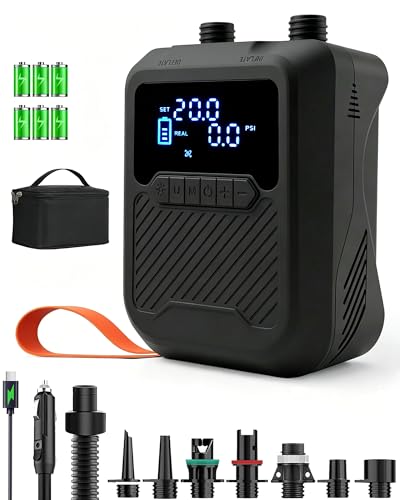
- Dual-stage inflation with LCD pressure control
- 13500mAh battery for multiple SUP inflations
- Auto-off plus built-in cooling system
Best For: First-time paddlers who want easy controls and cordless convenience
Car-Powered Convenience Pick

- No battery, just direct 12V car power
- Dual-stage inflation to 20 PSI
- Preset pressure with auto shutoff
Best For: Beginners who inflate near a vehicle and want zero battery hassle
Quick-Start Corded Power – KOSMEGAL 20PSI Electric SUP Pump
If you want paddleboard pumps for beginners that keep setup simple, this KOSMEGAL option focuses on easy controls, automatic shutoff, and fast inflation from a 12V car outlet. It’s built for SUPs, but the included nozzles also make it useful for other inflatables when you’re learning what gear you’ll actually use.
Best For: Beginners who want a straightforward car-powered pump with automatic shutoff and clear pressure settings.
Pros:
- Inflates a 10.6 ft board to 12 PSI in about 8 minutes.
- Auto-off helps prevent overinflation once the preset pressure is reached.
- LCD screen, flashlight, and pressure-unit controls make it easier to use.
- Comes with 7 nozzles and a carry bag for broader inflatable use.
Cons:
- Requires a 12V DC car connection, so it is not cordless.
- Deflation must be turned off manually.
Overall, this is a practical beginner-friendly electric pump if you plan to inflate from your vehicle and want a fast, guided setup without a lot of extra guesswork.
Dual-Motor Speed Pick – GICLE 22PSI SUP Pump
For buyers comparing paddleboard pumps for beginners, this GICLE model stands out for its dual-motor inflation, preset auto-off function, and compact car-powered design. It’s a useful pick if you want quicker inflation than a basic manual setup and prefer a pump that handles SUPs, kayaks, and other inflatables from one kit.
Best For: Beginners who want a fast, lightweight car pump with real-time pressure monitoring.
Pros:
- Dual motors help inflate a board to 12 PSI in about 6 minutes.
- Supports up to 22 PSI with automatic stop at the preset pressure.
- Includes an LCD gauge, 6 nozzles, and extra fuse and gasket pieces.
- Lightweight and compact for easy storage and transport.
Cons:
- Needs a 12V car power connection and 10A recommended power.
- Heavier than some portable models at 3.5 lb.
This pump is a strong fit if speed and convenience matter most, especially for beginners who want a compact unit with easy monitoring and broad inflatable compatibility.
Travel-Friendly Cordless Choice – Rechargeable 20PSI SUP Pump
If you’re shopping paddleboard pumps for beginners and want to skip cords at the beach or campsite, this rechargeable SUP pump is the most flexible option in the group. It combines a USB-C battery, 12V car connector, and fast deflation, so it can cover both home prep and on-the-go trips.
Best For: Beginners who want a cordless pump with car backup and easy portability.
Pros:
- 13,500mAh battery can inflate 3–4 paddle boards on one charge.
- Inflates a 10.6 ft board to 12 PSI in about 7 minutes.
- USB-C recharge and 12V car connector add flexibility.
- Fast deflation function helps with packing and storage.
Cons:
- Recharge time is 4–5 hours, so it needs planning before trips.
- Heavier than ultra-compact corded options at 2.86 lbs.
For beginners who value convenience and mobility, this is the easiest all-around option because it reduces dependence on your car while still keeping a car-powered backup available.
Simple Car-Powered Workhorse – 20PSI SUP Air Pump
This is a straightforward pick for paddleboard pumps for beginners who want a no-fuss, vehicle-powered inflator with clear pressure feedback. With inflation and deflation functions, a digital gauge, and several adapter options, it covers the basics well for SUPs and other inflatables.
Best For: Beginners who want an easy car-cigarette-lighter pump with quick inflation and deflation.
Pros:
- Inflates a regular paddle board in 10–15 minutes.
- Deflates fully in about 3 minutes.
- Built-in LCD display shows current pressure in real time.
- Includes 6 adapters for paddleboards, mats, and other inflatables.
Cons:
- Requires a car cigarette-lighter connection.
- Less compact than some smaller travel-oriented pumps.
It’s a practical beginner choice if you’re mostly inflating from your vehicle and want a simple, familiar setup with both inflation and deflation support.
Portable Rechargeable Pick – Electric Paddle Board Pump Portable, 22 PSI
If you want paddleboard pumps for beginners that keep setup simple, this rechargeable model is a practical pick. It offers dual power options, auto-off pressure control, and fast inflation for paddle boards, so you spend less time pumping and more time on the water.
Best For: Beginners who want a cordless, easy-to-carry pump with battery power for lakes, beaches, and campsites.
Pros:
- Rechargeable battery plus 12V car power gives you flexible use.
- Auto-off pressure control helps prevent over-inflation.
- Fast inflation and quick deflation speed up setup and pack-down.
- Includes 7 nozzles, carrying bag, and built-in flashlight.
Cons:
- Maximum pressure is 22 PSI, which is lower than some corded high-pressure options.
- Battery runtime depends on charge level and what you are inflating.
Overall, this is a beginner-friendly all-around pump if portability matters most. Its cordless design and simple digital controls make it easy to learn, while still covering paddle boards, kayaks, and other inflatables.
High-Pressure Corded Pick – Paddle Board Electric Pump, 50 PSI
Among paddleboard pumps for beginners, this corded model stands out if you want strong pressure and very simple setup. It plugs into a 12V car outlet, offers clear LED controls, and includes auto-off protection so you can set the pressure and let it finish the job.
Best For: Beginners who want a powerful car-powered pump with straightforward controls and broad compatibility.
Pros:
- High 50 PSI maximum pressure gives it plenty of headroom.
- Auto-off protection helps prevent over-inflation.
- LED display makes pressure readings easy to follow.
- Includes 8 valve adapters and a 10 ft power cable for versatility.
Cons:
- Requires a 12V DC car socket, so it is not cordless.
- Best suited to vehicle-based trips rather than remote beach setups.
This is a strong choice if you prefer a plug-in pump with more power than most beginner-friendly models. It is especially useful for paddlers who also want one pump for car tires and other inflatables.
Fast Rechargeable Pick – Tonsim Electric Paddle Board Pump Rechargeable 20 PSI
If you are comparing paddleboard pumps for beginners, this rechargeable option is appealing because it combines fast setup with easy preset modes. It can run cordless or from a 12V car connector, and the LCD pressure display with auto shut-off keeps inflation straightforward.
Best For: Beginners who want a fast, rechargeable SUP pump with simple one-button modes and clear pressure control.
Pros:
- Rechargeable 15600mAh battery supports cordless use.
- Dual-stage inflation and deflation help with faster setup and pack-up.
- Four preset modes make operation simple for SUP, tent, kayak, and balloon use.
- LCD display and auto shut-off add beginner-friendly control.
Cons:
- Maximum pressure is 20 PSI, lower than some other electric pumps.
- Heavier power-focused batteries may be less compact than smaller pumps.
This pump is a good fit if you want quick inflation without giving up cordless convenience. The preset modes and real-time pressure display make it easy to use for first-time SUP owners and anyone who wants less guesswork.
High-Power All-in-One Option – 50PSI Rechargeable SUP Pump with Tire Mode
If you want paddleboard pumps for beginners that feel straightforward and flexible, this rechargeable model is a strong fit. It combines fast SUP inflation, automatic shutoff, and a clear pressure display, so you can set your target PSI and let it run with less guesswork.
Best For: Beginners who want a cordless pump with strong pressure, quick setup, and extra versatility for other inflatables.
Pros:
- Up to 50 PSI output with dual-stage inflation for fast setup.
- 10000mAh battery can inflate up to 4 paddle boards per charge.
- Auto-off and real-time LED pressure display help prevent over-inflation.
- Works in SUP, tire, and deflation modes for more than just boards.
Cons:
- Battery runtime is limited if you need to inflate multiple large items back-to-back.
- Recharging takes about 3.5 to 4.5 hours.
- More features may be more than some first-time users need.
This is a practical pick if you want one pump that can handle SUP use plus backup tasks like tires, kayaks, and deflation. The cordless design adds convenience, while the 12V DC option gives you a fallback for longer outing days.
Balanced Portable Choice – 20PSI Dual-Stage SUP Pump
For paddleboard pumps for beginners, this portable option keeps the process simple with preset pressure, auto shutoff, and a readable LCD screen. Its dual-stage motor is designed to speed up inflation while still giving you a clear way to monitor pressure as you go.
Best For: First-time paddlers who want a cordless pump with easy controls and dependable inflation speed.
Pros:
- Dual-stage motor inflates a 10’6″ x 33″ x 6″ board to 10 PSI in about 7 minutes.
- 13500mAh battery can inflate up to 3 SUPs to 15 PSI or 4 SUPs to 12 PSI.
- Auto-inflate and auto shutoff make setup easier for beginners.
- Built-in cooling system and 67-decibel noise level help with extended use.
Cons:
- 12V DC car use is available, but it cannot charge the battery.
- Deflation needs to be stopped manually.
- Max pressure is 20 PSI, which is lower than some higher-output options.
This is a good middle-ground choice if you want simple operation without giving up useful extras like LED lighting and real-time pressure monitoring. It is easy to recommend for beginners who value a portable battery pump with solid everyday performance.
Car-Powered Convenience Pick – 12V Direct-Power SUP Pump
If you are comparing paddleboard pumps for beginners and already have easy access to a vehicle, this 12V model keeps things simple. It plugs directly into the car socket, uses preset pressure with auto shutoff, and avoids battery charging entirely.
Best For: Beginners who want a reliable car-powered pump with no battery to manage.
Pros:
- Direct 12V car power means no battery charging or battery maintenance.
- Dual-stage system inflates an 11 ft SUP to 12 PSI in about 6 minutes.
- Preset pressure and auto shutoff help make inflation more consistent.
- Includes 7 nozzles and works with SUPs, kayaks, boats, and other inflatables.
Cons:
- Must stay connected to a 12V car socket during use.
- No built-in battery limits use away from a vehicle.
- Best suited to users who regularly inflate near a car.
This pump makes sense when you want dependable performance without worrying about charge levels before a trip. The longer 3 m cable, clear display, and broad nozzle kit make it especially practical for straightforward paddling setups.
How We Picked These Paddleboard Pumps for Beginners
We prioritized ease of use, inflation speed, pressure range, and practical beginner features like auto-off, dual-stage inflation, and deflation support. We also looked for models that reduce effort for first-time SUP owners, whether they plug into a car outlet or run on a rechargeable battery.
Quick Comparison: What Matters Most
If you want the simplest setup, look for a pump with clear controls, a visible PSI display, and automatic shutoff at your target pressure. For home or beach use, rechargeable cordless models offer the most freedom. For longer trips or all-day use, 12V car-powered pumps can be more dependable as long as you have vehicle access.
Key Buying Factors for Paddleboard Pumps for Beginners
Pressure and Auto-Off
Most inflatable SUPs need around 12 to 15 PSI, while higher-pressure boards may need more. A pump with auto-off helps beginners avoid overinflation and removes guesswork.
Inflation Speed and Dual-Stage Design
Dual-stage pumps usually move air quickly at first, then switch to a higher-pressure mode near the end. That can save time and reduce strain, which is especially useful for Paddleboard Pumps for Beginners.
Power Source
Choose 12V DC if you want steady power from a car, truck, or boat battery. Choose rechargeable if portability matters most and you prefer not to rely on a vehicle.
Deflation and Portability
Deflation can make packing up much easier, especially for new owners who want a faster post-paddle routine. Compact size, hose length, nozzle compatibility, and carrying convenience also matter.
Who Should Buy Which Paddleboard Pumps for Beginners?
First-time paddlers who want the least hassle should start with an auto-off, dual-stage pump with simple controls. Travelers and casual beach users may prefer a cordless rechargeable model. Budget-focused buyers who usually inflate near a vehicle can often get the best value from a straightforward 12V pump. If you want a cleaner, faster overall experience, prioritize ease of use over max PSI numbers you may never need.