The best synthetic sleeping bags offer dependable insulation, practical moisture resistance, and easier care than many down alternatives. The right choice depends on the temperatures you expect, available packing space, and how much room you need to sleep comfortably.
This roundup compares 10 options ranging from lightweight three-season bags to roomy cold-weather and big-and-tall designs, helping you match insulation and fit to your camping style.
Best 10 Synthetic Sleeping Bags Picks for 2026
Lightweight Trail Pick

- 2 lb 6 oz total weight
- Cirroloft synthetic insulation
- Integrated compression stuff sack
Best For: Summer backpacking and damp-weather camping
Affordable 3-Season Choice
Amazon Basics Synthetic Sleeping Bag

- Rated down to 20°F
- Integrated hood and compression sack
- Machine washable polyester construction
Best For: Casual camping and flexible 3-season use
Cool-Weather Backpacking Pick

- 20°F temperature rating
- Compressible Cirroloft synthetic fill
- Includes compression straps and stuff sack
Best For: Cool-weather backpacking and damp conditions
Cold-Weather Comfort Option
Coleman Heritage Big & Tall 10°F
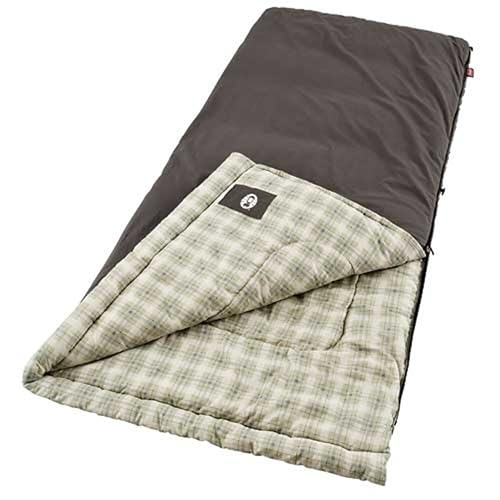
- 10°F rating with Holofill 808 fill
- 40 x 84 in. big-and-tall design
- Machine washable and 8.9 lb.
Best For: Tall campers and winter car camping
Best Cold-Weather Backpacking Pick

- 0°F synthetic insulation for cold, damp conditions
- Integrated compression stuff sack
- Spacious footbox and PFC-free recycled-nylon shell
Best For: Four-season backpackers prioritizing warmth and packability
Best Roomy Washable Option
0 Degree Hooded Envelope Sleeping Bag

- Roomy design for sleepers up to 6 feet 10 inches
- Machine washable with compression sack
- Hooded, blanket-convertible envelope shape
Best For: Big-and-tall campers and comfort-focused car campers
Best Lightweight Mummy Value
TETON Sports 20F Synthetic Bag

- Approximately 2.9 pounds for easier carrying
- Mummy hood, draft tubes, and vaulted footbox
- Compression sack and lifetime defect warranty
Best For: Three-season backpacking and hiking
Best All-Season Value
MalloMe Synthetic Sleeping Bag

- 50–80°F three-season comfort range
- Waterproof shell with synthetic insulation
- Compression sack and easy-clean construction
Best For: Mild-weather camping, hiking, and family trips
Best Compact Mummy Option
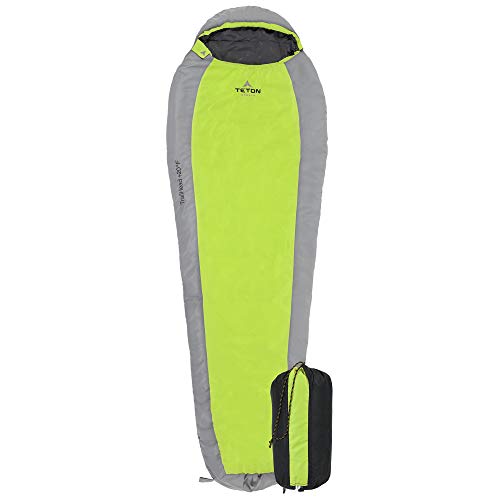
- Synthetic microfiber insulation compresses efficiently
- Mummy hood, draft tube, and footbox retain warmth
- Short 75-inch design weighs 2.4 pounds
Best For: Shorter sleepers and cool-weather backpacking
Best Simple Pick

- Full-length 87-inch adult fit
- Hood, draft tube, and vaulted footbox add warmth
- Synthetic insulation with compression sack
Best For: Cool-weather camping and backpacking for adults
Lightweight Trail Pick – Kelty Cosmic Synthetic 40°
The Kelty Cosmic Synthetic 40° is a practical choice for backpackers seeking synthetic sleeping bags for summer trips and damp conditions. Its Cirroloft insulation, integrated compression stuff sack, and 2-pound-6-ounce trail weight balance reliable warmth with packability.
Best For: Summer backpacking, camping, and hikers who want a lightweight synthetic bag for sleepers up to 6 feet.
Pros:
- Cirroloft synthetic fill maintains loft and coverage in cold, damp conditions.
- Integrated compression stuff sack improves packability.
- Spacious footbox, exterior stash pocket, and 20D nylon taffeta shell add practical trail functionality.
Cons:
- The 40°F rating is intended for warmer-season use rather than cold-weather camping.
- The regular size fits sleepers only up to 6 feet.
With a 40°F rating and compact design, this Cosmic model is best suited to summer backpacking where manageable weight and synthetic insulation matter more than deep-cold performance.
Affordable 3-Season Choice – Amazon Basics Synthetic Sleeping Bag
For straightforward camping value, this Amazon Basics model is one of the more accessible synthetic sleeping bags in the group. The polyester-filled mummy design includes an integrated hood, compression sack, machine-washable construction, and blanket-style use when fully unzipped.
Best For: Casual campers and adults wanting a versatile 3-season bag rated down to 20°F.
Pros:
- Mummy shape and integrated hood provide added warmth.
- Includes a compression carry sack and integrated bundling loops.
- Can be fully unzipped and used as a blanket, and is machine washable.
Cons:
- At 1.9 kg, it is heavier than the lightweight backpacking options here.
- The supplied details do not specify a maximum sleeper height.
This is a practical general-purpose option when easy care, flexible configuration, and a 20°F rating are priorities, though its weight may be less appealing for extended backpacking.
Cool-Weather Backpacking Pick – Kelty Cosmic Synthetic 20°
The Kelty Cosmic Synthetic 20° offers a warmer backpacking option for shoppers comparing synthetic sleeping bags for cooler trips. Cirroloft insulation is designed to retain loft in damp conditions, while the included compression straps and stuff sack help manage its 2-pound-13-ounce weight.
Best For: Cool-weather backpacking and campers who need a compressible synthetic mummy bag rated to 20°F.
Pros:
- 20°F temperature rating extends use into colder conditions than the 40°F model.
- Cirroloft fill is designed for reliable warmth in cold and damp conditions.
- Compression straps, stuff sack, soft taffeta lining, and PFC-free DWR treatment support trail use.
Cons:
- Its 2-pound-13-ounce weight is heavier than the warmer-weather Cosmic model.
- The listed regular fit accommodates sleepers up to 6 feet.
The 20°F rating makes this Cosmic a stronger choice for shoulder-season and cool-weather trips, especially when synthetic performance in damp conditions is more important than ultralight weight.
Cold-Weather Comfort Option – Coleman Heritage Big & Tall 10°F
The Coleman Heritage Big & Tall is a roomy cold-weather alternative among synthetic sleeping bags, with a 10°F rating, five pounds of Holofill 808 insulation, and a 40-by-84-inch rectangular design. Its cotton cover and synthetic flannel liner emphasize comfort for car camping, hunting, or guest use rather than lightweight backpacking.
Best For: Tall adults, winter car camping, hunting, and anyone prioritizing roominess and warmth.
Pros:
- 10°F rating and five pounds of Holofill 808 insulation support cold-weather use.
- Big-and-tall 40-by-84-inch rectangular shape accommodates campers up to 6 feet 7 inches.
- Machine-washable construction, no-snag zipper, FiberLock, and Wrap ‘N’ Roll storage system add convenience.
Cons:
- At 8.9 pounds, it is substantially heavier than backpacking-oriented models.
- The cotton cover and flannel liner are less focused on compact trail packing.
Choose this Coleman when warmth, generous dimensions, and easy maintenance matter more than carrying weight. It is particularly well matched to vehicle-supported cold-weather camping.
Best Cold-Weather Backpacking Pick – Kelty Cosmic Synthetic 0F
For shoppers comparing synthetic sleeping bags for cold, damp trips, the Kelty Cosmic Synthetic 0F focuses on dependable insulation and trail-ready packability. Its Cirroloft synthetic fill is designed to maintain loft in damp conditions, while the integrated compression stuff sack helps reduce bulk.
Best For: Backpackers needing a highly compressible 0°F mummy bag for four-season use.
Pros:
- 0°F temperature rating for cold-weather camping.
- Cirroloft synthetic insulation provides coverage without cold spots and retains loft in damp conditions.
- Integrated compression stuff sack and PFC-free, recycled-nylon shell support practical trail use.
- Spacious footbox, exterior stash pocket, and regular sizing for sleepers up to 6 feet.
Cons:
- At about 4 pounds 6 ounces for the regular version, it is not the lightest option presented.
- The listed uncompressed stuff size is 17 by 11 inches.
This is a strong choice when cold-weather warmth and synthetic insulation matter more than minimizing every ounce. The mummy shape and compression system make it especially suitable for backpacking where damp conditions are possible.
Best Roomy Washable Option – 0 Degree Hooded Envelope Sleeping Bag
This envelope-style option is a practical alternative among synthetic sleeping bags for campers who want extra room, a hood, and easy cleaning. Its 450GSM microfiber fill, soft pongee lining, waterproof polyester shell, and machine-washable construction support comfortable repeat use.
Best For: Big-and-tall campers and family or car-camping trips where roominess and easy care are priorities.
Pros:
- Roomy 7.2-foot length and 2.6-foot width accommodate sleepers up to 6 feet 10 inches.
- 450GSM microfiber fill is rated from 5°F extreme to 32°F comfort, according to the supplied specifications.
- Machine washable and supplied with a compression sack.
- Hood, wind buffer, anti-snag zipper design, and blanket-convertible envelope shape add versatility.
Cons:
- Approximately 5 pounds, making it heavier than the backpacking-focused alternatives here.
- The envelope shape and spacious dimensions may be bulkier for minimalist backpacking.
- Temperature ratings are provided as a reference and may vary by individual experience.
Choose this bag when comfort, generous dimensions, and simple maintenance outweigh compact trail weight. It is particularly appealing for larger sleepers and campers who want one synthetic bag for varied seasonal outings.
Best Lightweight Mummy Value – TETON Sports 20F Synthetic Bag
For three-season trips, this TETON mummy bag offers a lighter approach to synthetic sleeping bags without giving up features aimed at retaining warmth. The microfiber insulation is designed for loft and compressibility, while the hood, draft tubes, and vaulted footbox add coverage for camping and backpacking.
Best For: Three-season backpackers, hikers, and campers seeking a relatively light synthetic mummy bag.
Pros:
- About 2.9 pounds, making it the lightest listed option.
- Mummy hood, zipper draft tubes, and insulated vaulted footbox help retain warmth.
- Includes a compression sack with heavy-duty straps for stuffing and transport.
- Lifetime warranty applies to defects in materials or workmanship for the original owner.
Cons:
- Listed as a 3-season bag with a +20°F temperature rating, so it is less suited to deep winter use.
- The standard size has an 81-inch maximum height recommendation, offering less room than the hooded envelope option.
This is the most practical pick for shoppers who want to keep pack weight down while retaining mummy-style warmth features. Pairing it with a camp pad and fluffing the bag, as recommended by the manufacturer, can help maximize warmth.
Best All-Season Value – MalloMe Synthetic Sleeping Bag
For campers seeking versatile synthetic sleeping bags, the MalloMe offers a practical three-season design with a 50–80°F comfort range. Its waterproof shell, synthetic fill, and included compression sack make it suitable for casual camping, hiking, and backpacking.
Best For: Adults and kids camping in spring, summer, fall, and other mild conditions.
Pros:
- Waterproof HEX-TECH polyester shell helps protect against damp conditions.
- Lightweight design weighs about 3 pounds and includes a compression sack.
- Machine-washable construction and a wipe-clean outer shell simplify maintenance.
- Double-sided snag-free zippers, a drawstring headrest, and a securing strap improve usability.
Cons:
- The 50–80°F rating is intended for mild weather rather than deep cold.
- Its rectangular shape may be less thermally efficient than a mummy bag.
This is a flexible choice for family camping and warm-weather backpacking, especially when easy cleaning and weather-resistant materials matter more than extreme-cold performance.
Best Compact Mummy Option – TETON 20°F Short Mummy Bag
This TETON model is one of the more compact synthetic sleeping bags for campers who want mummy-bag warmth without excessive bulk. Its microfiber insulation, roomy footbox, draft tube, and included stuff sack support comfortable camping and backpacking in cooler conditions.
Best For: Shorter adults or kids who need a lightweight, compressible bag for hiking, backpacking, and camping.
Pros:
- Synthetic microfiber insulation is designed to provide loft and compressibility.
- Mummy shape, zipper draft tube, and roomy footbox support warmth and comfort.
- Includes a stuff sack for stuffing rather than rolling the bag.
- Anti-snag zippers can be operated from inside or outside.
Cons:
- The short 75-inch length may not suit taller adults.
- The supplied details list a +20°F rating but do not specify a separate comfort rating.
With its shorter dimensions and 2.4-pound weight, this bag prioritizes portability and fit. Check the 75-inch length carefully before choosing it for an adult sleeper.
Best Simple Pick – TETON 20°F Standard Mummy Bag
For campers comparing synthetic sleeping bags for cooler nights, this standard-size TETON mummy bag combines synthetic microfiber insulation with a hood, draft tube, and vaulted footbox. It is survival-rated to +20°F and packs into the included compression sack for backpacking and camping.
Best For: Adults who want a full-length mummy bag with added head and foot insulation for cool-weather outdoor use.
Pros:
- 87-inch length and 32-inch width provide a standard adult fit.
- Mummy hood helps retain warmth around the head and face.
- Double-brushed liner, draft tube, and vaulted footbox emphasize comfort and warmth.
- Compression sack and synthetic insulation support easier packing.
Cons:
- At 2.9 pounds, it is heavier than the short TETON version.
- The +20°F survival rating should not be treated as a guaranteed comfort temperature.
This is the stronger TETON choice for taller adults or anyone wanting more room than the short model. Using a camp pad and restoring the bag’s loft can help improve warmth, as the manufacturer recommends.
How We Picked These Synthetic Sleeping Bags
We focused on practical features that matter outdoors: temperature ratings, insulation type, packed size, shape, sizing, weather resistance, and ease of maintenance. The selection includes mummy-style bags for warmth and efficient packing, roomier rectangular designs for comfort, and options for adults, children, and taller campers.
Temperature ratings are useful for comparison, but they are not guarantees of comfort. Your sleeping pad, clothing, shelter, wind exposure, and personal cold tolerance all affect real-world performance.
Quick Comparison
- Warm-weather and versatile camping: Consider 40-degree and three-season models for summer trips, mild nights, and general campground use.
- Cooler shoulder-season trips: A 20-degree bag offers a practical balance of warmth, weight, and packability for many backpacking conditions.
- Winter and cold-weather camping: Choose a 0-degree or 10-degree design when freezing temperatures are expected, while checking the complete sleep system carefully.
- Maximum room: Big-and-tall and rectangular bags provide more space for larger sleepers or anyone who dislikes a close mummy fit.
- Family use: Look for simple care instructions, forgiving fit, and child-appropriate sizing when selecting a bag for younger campers.
Key Buying Factors for Synthetic Sleeping Bags
Temperature Rating
Choose a rating based on the coldest conditions you realistically expect, not just the average forecast. For uncertain weather, a warmer bag gives you more flexibility, provided you can carry its additional weight and bulk.
Insulation and Moisture Handling
Synthetic fill generally retains more insulating ability than down when damp and is often easier to wash and dry. It can still lose loft when compressed for long periods, so store the bag loosely at home and use the compression sack only for transport.
Shape and Fit
Mummy bags reduce empty air space and typically provide better warmth-to-weight efficiency. Rectangular and big-and-tall styles feel less restrictive but may be heavier and less thermally efficient. Check the listed length and shoulder, hip, and foot dimensions before ordering.
Weight, Packed Size, and Features
Backpackers should compare total weight and compressed volume, not just the product’s temperature rating. Look for a durable zipper, draft tube, hood, footbox, stuff sack, and compression straps when those features support your intended use.
Care and Durability
Machine-washable construction can be valuable for family camping and frequent use, but follow the manufacturer’s cleaning instructions. A groundsheet, tent, or bivy can help protect the shell from dirt, moisture, and abrasion.
Who Should Buy Which Synthetic Sleeping Bags?
Backpackers: Prioritize a compact 20-degree or 40-degree mummy bag for mild-to-moderate conditions, then move to a 0-degree model only when the added warmth is necessary.
Car campers: A roomier rectangular bag may be preferable because packed size and weight are less important than comfort. Choose a warmer rating for shoulder-season use.
Tall or larger sleepers: Big-and-tall designs can prevent restricted movement and exposed feet. Verify the maximum user height rather than relying on the product name alone.
Winter campers: Select a properly rated cold-weather bag and pair it with an insulated sleeping pad and suitable shelter. Do not rely on the bag alone to compensate for inadequate ground insulation.
Families and occasional campers: Favor easy-care synthetic construction, straightforward sizing, and a temperature rating suited to the trips you actually take. A versatile three-season option is often the most practical starting point.