The best handheld GPS devices for backpacking help you stay oriented when trails are poorly marked, phone service disappears, or weather changes your plans. The right model can provide dependable positioning, useful maps, long battery life, and—in some cases—two-way satellite messaging for emergencies.
This roundup compares ten rugged options across Garmin’s navigation and satellite-communication ranges, including straightforward GPS units, touchscreen models, solar-powered designs, and connected devices for more remote trips.
Best 10 Handheld Gps Devices for Backpacking Picks for 2026
High-Accuracy Navigator

- Multi-band GNSS support for challenging terrain
- 2.6-inch sunlight-readable color display
- TopoActive maps and public land boundaries included
Best For: Backpackers who want enhanced positioning accuracy
Emergency Communicator

- Two-way satellite messaging and interactive SOS
- Compact design with TracBack routing
- Up to 14 days of battery life in tracking mode
Best For: Off-grid communication and emergency preparedness
Long-Battery Navigator

- Up to 25 hours with two AA batteries
- Routable TopoActive maps preloaded
- GPS and GLONASS satellite support
Best For: Simple, long-lasting trail navigation
Connected Mapping Device
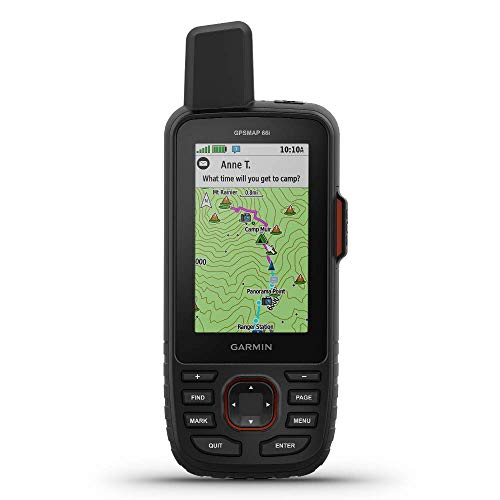
- 3-inch color display with TOPO mapping
- Satellite messaging and interactive SOS
- Up to 200 hours in Expedition mode
Best For: All-in-one navigation and off-grid communication
Classic Trail Navigator

- Sunlight-readable 2.2-inch color display
- Expandable mapping with 3.7 GB internal memory
- Compass, altimeter, and 25-hour battery life
Best For: Backpackers seeking traditional offline navigation with expandable map storage
Backcountry Safety Pick
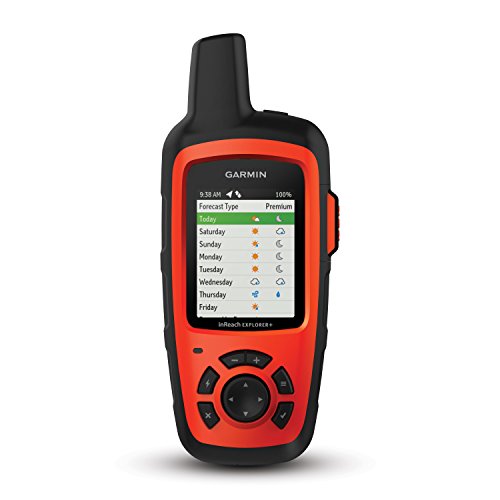
- Two-way satellite messaging with global Iridium coverage
- Interactive SOS monitored 24/7
- Preloaded topo maps and 30-hour battery life
Best For: Remote backpackers who need navigation and satellite communication
Solar Endurance Choice

- Unlimited battery life in qualifying sunny conditions
- Up to 200 hours without solar charging
- Multi-band GPS with IPX7 water resistance
Best For: Long-distance backpackers prioritizing battery endurance and modern positioning
Best Touchscreen Pick

- 3-inch sunlight-readable touchscreen
- IPX7-rated rugged design
- Compass, altimeter, and Connect IQ support
Best For: Backpackers who prefer touchscreen navigation and customization
Best Long-Life Budget Option

- Up to 36 hours of battery life
- Preloaded USA Topo maps
- Multi-GNSS and physical-button controls
Best For: Hikers seeking rechargeable endurance and practical trail mapping
Best Battery Life

- Up to 1,800 hours in expedition mode
- Field-replaceable AA batteries
- Multi-GNSS and IPX7 water resistance
Best For: Multi-day backpacking trips with limited access to charging
High-Accuracy Navigator – Garmin GPSMAP 65
For backpackers who prioritize dependable positioning, the Garmin GPSMAP 65 is one of the more capable handheld GPS devices for backpacking in difficult terrain. Its multi-band technology and expanded GNSS support are designed to improve accuracy around dense forests, steep country, and urban canyons, while the button-operated design works well when you want straightforward field controls.
Best For: Backpackers navigating challenging terrain who want enhanced satellite accuracy and a large color display.
Pros:
- Multi-band technology and expanded GNSS support help optimize positioning in difficult locations.
- Sunlight-readable 2.6-inch color display is easy to view on the trail.
- Preloaded routable TopoActive maps and U.S. federal public land boundaries support trip planning.
- Garmin Explore compatibility helps manage tracks, routes, waypoints, and trip statistics.
Cons:
- Battery life is rated at up to 16 hours, shorter than some simpler GPS units.
- Some connected features require a compatible smartphone.
The GPSMAP 65 is a strong choice when navigation accuracy matters more than minimalism. Its 16-hour battery rating and button controls are worth considering alongside its advanced satellite support.
Emergency Communicator – Garmin inReach Mini 2
The Garmin inReach Mini 2 is a compact satellite communicator for backpackers who need communication beyond cell coverage. It supports two-way messaging and interactive SOS through an active satellite subscription, while navigation features such as TracBack, a digital compass, and Garmin Explore integration add useful route-finding support.
Best For: Backpackers who value off-grid messaging, emergency response, and location sharing in a small device.
Pros:
- Two-way satellite messaging and interactive SOS work globally with an active subscription.
- Compact, lightweight design with a sunlight-readable monochrome display.
- TracBack routing helps you navigate back toward your starting point.
- Battery life reaches up to 14 days in 10-minute tracking mode.
Cons:
- An active satellite subscription is required for messaging, SOS, and location-sharing features.
- Its 1.27-inch display is smaller than the screens on dedicated color mapping handhelds.
This is less of a traditional map-focused GPS navigator and more of a safety and communication companion. Choose it when staying connected beyond cell service is central to your backpacking plans.
Long-Battery Navigator – Garmin eTrex 22x
The Garmin eTrex 22x is a straightforward option for backpackers looking for reliable handheld GPS devices for backpacking without a touchscreen. It combines a 2.2-inch sunlight-readable color display, preloaded routable TopoActive maps, GPS and GLONASS support, and up to 25 hours of battery life from two AA batteries.
Best For: Backpackers who want simple button-operated navigation, replaceable AA batteries, and useful trail mapping.
Pros:
- Up to 25 hours of GPS battery life with two AA batteries.
- Preloaded TopoActive maps include routable roads and trails for hiking and cycling.
- GPS and GLONASS support can improve tracking in more challenging environments.
- 8 GB of internal memory and a microSD card slot support additional map storage.
Cons:
- The 2.2-inch screen is smaller than the displays on the GPSMAP 65 and 66i.
- It lacks a touchscreen and satellite messaging or SOS features.
The eTrex 22x is a practical, uncomplicated navigator for trips where long battery life and easy-to-replace batteries matter. It is best suited to route guidance rather than two-way emergency communication.
Connected Mapping Device – Garmin GPSMAP 66i
The renewed Garmin GPSMAP 66i combines a full-featured handheld GPS with inReach satellite communication. For backpackers who want both detailed navigation and off-grid contact, it offers a 3-inch sunlight-readable color display, preloaded TOPO mapping, satellite imagery downloads, two-way messaging, and interactive SOS through an active subscription.
Best For: Backpackers seeking an all-in-one mapping, tracking, messaging, and emergency communication device.
Pros:
- Two-way messaging and interactive SOS use the global Iridium satellite network with a subscription.
- Large 3-inch color display supports easier map viewing.
- Preloaded TOPO mapping and direct-to-device Birdseye satellite imagery downloads support route planning.
- Battery life reaches up to 35 hours in specified tracking modes and 200 hours in Expedition mode.
Cons:
- Satellite messaging and SOS require an active subscription.
- This listing is renewed and includes a 90-day limited warranty.
- Its broader feature set may be more than needed for backpackers seeking basic GPS navigation.
The GPSMAP 66i is the most comprehensive choice in this group for combining navigation and emergency connectivity. Its renewed status and subscription requirement should be weighed against its larger display and extensive feature set.
Classic Trail Navigator – Garmin eTrex 30x
For backpackers who want dependable offline navigation, the Garmin eTrex 30x combines a sunlight-readable color screen with expandable mapping and long battery life. Its compact design, electronic compass, and barometric altimeter make it a practical choice among handheld GPS devices for backpacking.
Best For: Backpackers who prioritize detailed map storage, traditional handheld controls, and sensor-assisted navigation.
Pros:
- 2.2-inch, 65K-color display offers improved 240 x 320 resolution and sunlight readability.
- 3.7 GB of internal memory and a microSD slot support additional map data.
- Includes a 3-axis compass, barometric altimeter, and up to 25 hours of battery life.
- Can wirelessly share waypoints, tracks, routes, and geocaches with compatible devices.
Cons:
- It is an older 2015 model.
- Additional mapping options such as BirdsEye Satellite Imagery require a subscription.
The eTrex 30x is a straightforward, map-capable hiking GPS for users who prefer a dedicated device over relying on a phone. Its expandable storage and built-in sensors add useful flexibility for longer trips.
Backcountry Safety Pick – Garmin inReach Explorer+
The Garmin inReach Explorer+ adds two-way satellite messaging and SOS capability to GPS navigation, making it a strong option for remote trips. It includes preloaded topo maps, onscreen routing, and location sharing, though satellite communication requires a subscription.
Best For: Backpackers traveling beyond cellular coverage who want navigation plus emergency communication.
Pros:
- Global Iridium coverage supports two-way text messaging from anywhere with a subscription.
- Offers interactive SOS access to a 24/7 search-and-rescue monitoring center.
- Includes preloaded topo maps, onscreen GPS routing, a compass, and a barometric altimeter.
- Provides up to 30 hours of battery life and an IPX7 water rating.
Cons:
- Satellite messaging and SOS features require a subscription.
- The display resolution is limited to 200 x 265 pixels.
- It is heavier and larger than some basic handheld GPS units at 8 ounces.
For remote backpacking, the inReach Explorer+ offers capabilities that ordinary GPS receivers do not, especially two-way messaging and emergency support. It is best suited to users willing to maintain a satellite service plan.
Solar Endurance Choice – Garmin eTrex Solar
The Garmin eTrex Solar is designed for extended outings, pairing a high-contrast display with solar charging and multi-band GPS. It is a compelling choice among handheld GPS devices for backpacking when reducing charging concerns matters, while Bluetooth connectivity adds app-based planning and updates.
Best For: Backpackers on long, sunny trips who want extended battery performance and modern GPS accuracy.
Pros:
- Can provide unlimited battery life in sunny conditions rated at 75,000 lux.
- Offers up to 200 hours without solar charging.
- Multi-band GPS is designed to improve positional accuracy.
- Includes a digital compass, IPX7 water resistance, and Garmin Explore app connectivity.
Cons:
- Solar performance depends on sufficiently sunny conditions.
- Only 28 MB of listed internal memory may limit onboard map storage.
- Many planning, weather, and additional mapping features rely on a compatible smartphone and app.
The eTrex Solar stands out for battery endurance rather than extensive onboard storage. Its solar capability, multi-band positioning, and rugged water-resistant design make it especially appealing for long-distance hiking in open, sunny environments.
Best Touchscreen Pick – Garmin Oregon 700
For backpackers who prefer a touchscreen interface, the Garmin Oregon 700 is a capable choice among handheld GPS devices for backpacking. Its sunlight-readable display, outdoor sensors, wireless connectivity, and rugged waterproof design support navigation in changing trail conditions.
Best For: Backpackers who want touchscreen controls, customizable features, and built-in elevation and compass sensors.
Pros:
- 3-inch sunlight-readable touchscreen supports landscape or portrait viewing.
- Includes a 3-axis electronic compass, accelerometer, and barometric altimeter.
- Water-rated to IPX7 and designed to resist dust, dirt, and humidity.
- Supports Wi-Fi, Bluetooth, ANT+, and Connect IQ customization.
Cons:
- Battery life is rated at up to 16 hours, considerably less than some button-operated alternatives.
- Touchscreen controls may be less convenient than physical buttons in difficult conditions.
The Oregon 700 stands out for its flexible touchscreen and sensor package. It is a practical fit if easy customization and a larger interface matter more to you than maximum battery endurance.
Best Long-Life Budget Option – NiesahYan Handheld GPS
The NiesahYan handheld GPS offers a straightforward option for hikers comparing handheld GPS devices for backpacking. It combines physical buttons, a sunlight-readable 3.2-inch screen, USA Topo maps, multi-GNSS support, and a rechargeable battery rated for up to 36 hours.
Best For: Backpackers who want long rechargeable battery life, physical controls, and preloaded USA topographic maps.
Pros:
- Up to 36 hours of battery life and USB-C recharging.
- Supports GPS, Galileo, BeiDou, and QZSS for multi-GNSS positioning.
- Includes a 3-axis compass and barometric altimeter.
- Preloaded USA Topo maps and 32 GB of internal storage support map downloads.
Cons:
- IP66 water resistance is specified rather than the higher IPX7 rating found on some alternatives.
- The non-touchscreen button interface may feel less flexible for users accustomed to touch controls.
This model emphasizes endurance, physical controls, and useful mapping storage. Its feature set makes it appealing for extended hikes, especially when a rechargeable device with USA maps is the priority.
Best Battery Life – Garmin eTrex SE
The Garmin eTrex SE is a strong battery-focused choice among handheld GPS devices for backpacking. Its button-operated interface, sunlight-readable display, multi-GNSS support, and field-replaceable AA batteries make it well suited to trips where charging opportunities are limited.
Best For: Backpackers prioritizing exceptional battery endurance and dependable physical-button operation.
Pros:
- Runs up to 168 hours in standard mode or 1,800 hours in expedition mode.
- Uses two field-replaceable AA batteries, allowing spares to be carried.
- Supports GPS, GLONASS, Galileo, BeiDou, and QZSS.
- IPX7 water resistance and a sunlight-readable 2.2-inch display support outdoor use.
Cons:
- AA batteries are not included.
- The 2.2-inch display is smaller than the screens on the other listed models.
- Wireless features such as updates and additional mapping require pairing with the Garmin Explore app and a compatible smartphone.
The eTrex SE is the clearest choice when battery longevity outweighs screen size and touchscreen convenience. Its replaceable batteries and expedition mode are particularly useful for multi-day trips away from power.
How We Picked the Best Handheld Gps Devices for Backpacking
We focused on features that matter away from roads and reliable cellular coverage: satellite reception, mapping capabilities, battery performance, weather resistance, controls, screen readability, size, and overall usefulness on multi-day trips. We also separated basic GPS navigators from satellite communicators, since messaging and SOS features add capability but may require a subscription.
The selection includes established Garmin models as well as a more general-purpose rugged handheld. Product condition matters too: renewed devices can offer value, but buyers should confirm warranty coverage, battery health, included accessories, and return policies.
Quick Comparison
- Best for dependable positioning: Garmin GPSMAP 65, with expanded satellite support and multi-band technology.
- Best compact communicator: Garmin inReach Mini 2, for messaging and SOS capability in a small package.
- Best simple navigation value: Garmin eTrex 22x or eTrex SE, depending on mapping and connectivity needs.
- Best connected navigator: GPSMAP 66i or inReach Explorer+, which combine navigation with satellite communication.
- Best for extended trips: eTrex Solar, particularly where regular sunlight can help supplement battery power.
Key Buying Factors for Handheld Gps Devices for Backpacking
Navigation and Satellite Reception
Look for a receiver that performs consistently under tree cover, in valleys, and near steep terrain. Multi-band and expanded satellite support can improve positioning in challenging environments, though conditions and satellite visibility still affect accuracy.
Maps and Route Planning
Preloaded topographic maps are convenient, while expandable storage and downloadable maps provide more flexibility. Check whether map updates, detailed regions, or route-planning software require additional purchases or subscriptions.
Battery Life and Charging
Compare advertised runtime in the mode you expect to use. Frequent track recording, navigation, messaging, bright screens, and cold temperatures can reduce endurance. Replaceable batteries are useful on long trips; rechargeable models are simpler for regular use, and solar assistance can extend time between charges in suitable conditions.
Controls, Display, and Durability
Button controls are practical in rain and with gloves, while touchscreens can make map browsing faster. A sunlight-readable color display is helpful during the day, but screen size can increase weight and power use. Water resistance and a rugged housing are important for exposed trails.
Satellite Messaging and SOS
If you travel beyond cellular coverage, an inReach-style communicator can provide two-way messages, location sharing, and emergency SOS functionality. Confirm plan costs, activation requirements, regional availability, and whether the device remains useful without an active subscription.
Who Should Buy Which Handheld Gps Devices for Backpacking?
Choose a basic eTrex model if you want affordable route tracking and offline navigation without messaging. Pick the GPSMAP 65 when reception performance is a priority in difficult terrain. The eTrex Solar suits hikers who value long endurance and simple operation.
For solo travelers, remote backpackers, and families who want check-ins or emergency communication, the inReach Mini 2, GPSMAP 66i, or inReach Explorer+ is the better fit. Choose based on whether you prefer a compact communicator or a larger navigation-focused device. Finally, consider the Oregon 700 or similar touchscreen option if easy map interaction matters more than the lightest possible pack weight.